Photography Blog

5 Pro Tips for Taking Stunning Photos with Your Camera Phone

Camera phones have come a long way in recent years, and many of them now have advanced features that allow for professional-looking shots. However, even with these features, it can be challenging to take great photos with a camera phone. Here are some tips to help you get the most out of your camera phone’s capabilities.

1. Use the Grid Lines

  • Use the grid lines: Most camera phones have the option to turn on grid lines, which can help you align your shot and apply the rule of thirds. This is a photography technique that involves dividing the frame into nine equal squares and placing the subject of the photo along one of the lines or at the intersection of two lines. This can create a more balanced and visually interesting composition.

2. Experiment with Different Angles

  • Experiment with different angles: Camera phones are small and easy to hold, making it easy to take photos from different angles. Don’t be afraid to get low to the ground or take a photo from a high angle. This can add visual interest to your photos and make them stand out.

3. Use Natural Light

  • Use natural light: Natural light is the best light for photography. If possible, try to take your photos outdoors during the day or in a well-lit room. Avoid using the flash, as it can create harsh shadows and make the photo look unnatural.

4. Edit Your Photos

  • Edit your photos: Most camera phones come with built-in editing tools, such as cropping, brightness, and contrast adjustments. Use these tools to enhance your photos and make them look their best.

5. Utilize Third-Party Apps

  • Utilize third-party apps: There are many third-party photography apps that can give you more control over your camera phone’s settings and help you take better photos. Some popular photography apps include Lightroom, VSCO, and Snapseed.

Some of the most commonly used camera phones for photography are:

  1. Apple iPhone: The iPhone camera is known for its high image quality, and the latest models have advanced features such as multiple lenses, night mode, and deep fusion technology.

  1. Samsung Galaxy: Samsung’s Galaxy smartphones have a reputation for producing high-quality images and videos, thanks to their advanced camera technology and features such as multiple lenses and high-resolution sensors.
  2. Google Pixel: Google’s Pixel smartphones are known for their exceptional camera performance, thanks to their advanced software and AI-based features such as Night Sight and Portrait Mode.
  3. OnePlus: OnePlus smartphones are known for their fast performance and high-quality cameras, which feature advanced features such as multiple lenses and high-resolution sensors.
  4. Huawei P series: Huawei’s P series smartphones are known for their high-quality cameras and advanced features such as multiple lenses and AI-based image stabilization.

In conclusion, while camera phones have come a long way in recent years and can take stunning photos, it is important to remember that professional cameras still have the upper hand when it comes to image quality and advanced features. However, with the right techniques and tools, you can get the most out of your camera phone and take photos that are on par with those taken by professionals. The key is to experiment, learn the capabilities and limitations of your camera phone, and have fun with it. Remember that the most important aspect of photography is capturing memories and moments that are dear to you.

Mastering the Exposure Triangle: A Guide to Aperture, Shutter Speed and ISO

The exposure triangle is a fundamental concept in photography that refers to the three elements that control the amount of light that enters a camera: aperture, shutter speed, and ISO.

Aperture

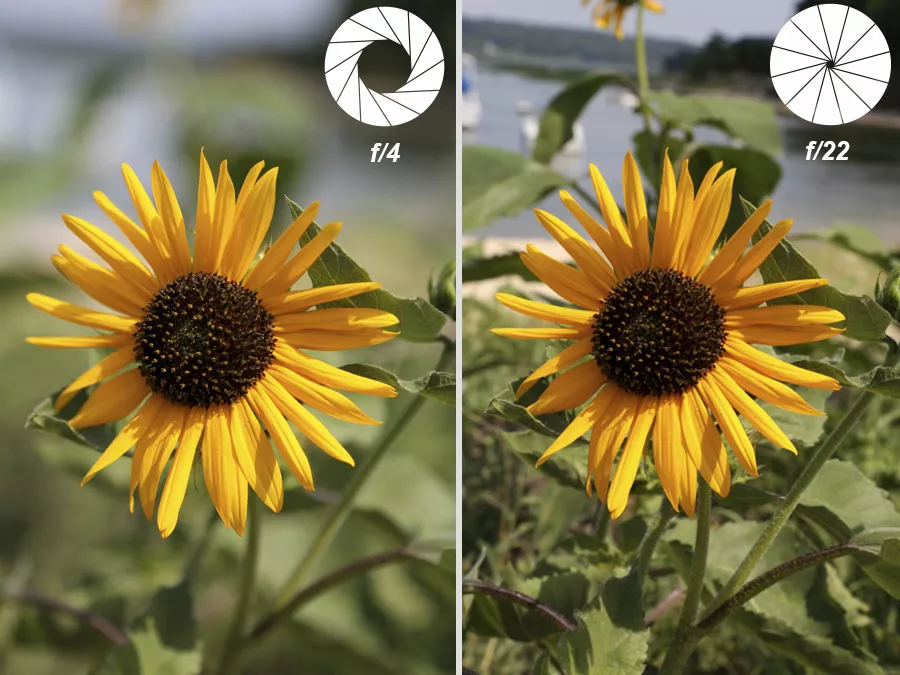
Aperture is the opening in a camera lens that controls the amount of light that enters the camera. It is measured in f-stops, with a lower f-stop indicating a larger aperture and a higher f-stop indicating a smaller aperture. A larger aperture will allow more light to enter the camera, resulting in a brighter image. However, it also affects the depth of field, which is the amount of the image that is in focus. A larger aperture will result in a shallower depth of field, with only a small portion of the image in focus, while a smaller aperture will result in a deeper depth of field, with more of the image in focus.

Shutter Speed

Shutter speed is the length of time that the camera’s shutter is open, allowing light to reach the sensor. It is measured in seconds or fractions of a second. A faster shutter speed will allow less light to enter the camera, resulting in a darker image, but it can also freeze fast-moving subjects, such as sports or wildlife. A slower shutter speed will allow more light to enter the camera, resulting in a brighter image, but it can also blur moving subjects, creating a sense of motion in the image.

ISO

ISO is the sensitivity of the camera’s sensor to light. A lower ISO indicates a lower sensitivity, while a higher ISO indicates a higher sensitivity. A lower ISO will result in less noise or grain in the image, but it will also require more light to achieve a proper exposure. A higher ISO will result in more noise or grain in the image, but it will also require less light to achieve a proper exposure.

It is important to note that all three elements of the exposure triangle are interconnected. Changing one element will affect the others. As a result, photographers must carefully balance the aperture, shutter speed, and ISO to achieve the desired exposure and creative effect in their images.

The most important element of the exposure triangle is the Aperture, as it’s the one that controls the depth of field, which is one of the most important aspect of an image.

You can see the exposure triangle by visiting the link https://www.exposureguide.com/exposure-triangle/

Why Digital Cameras are Superior to Phone Cameras

Brief overview of the key differences between digital cameras and phone cameras

When it comes to capturing memories, we all want the best possible image quality. While phone cameras have come a long way in recent years, digital cameras still offer a level of quality and flexibility that phone cameras simply cannot match.

Image Quality

First and foremost, digital cameras have much larger image sensors than phone cameras. A larger sensor allows for better light sensitivity, which means better low-light performance and less noise in your images. Additionally, digital cameras often have a wider range of aperture settings, which allows you to control the depth of field in your images and create more professional-looking photos.

Flexibility

Another advantage of digital cameras is the ability to change lenses. With a phone camera, you’re stuck with the one lens it comes with. With a digital camera, you can swap out lenses to suit different shooting situations, such as a wide-angle lens for landscapes or a telephoto lens for portraits.

Digital cameras also have more manual controls and settings, giving you greater control over the final image. This allows you to fine-tune settings such as shutter speed, ISO, and white balance, resulting in more accurate and professional-looking images.

In addition to the larger image sensors and manual controls, another major advantage of digital cameras is their ability to handle different lighting situations. Good lighting is crucial in photography, as it can make or break an image. Digital cameras, particularly those with advanced settings, allow you to manipulate lighting in a way that phone cameras simply cannot.

With a digital camera, you have the ability to adjust the shutter speed, aperture, and ISO to get the perfect exposure. This means you can shoot in low light without the image becoming too grainy, or capture a fast-moving subject without motion blur. Additionally, digital cameras often have built-in flash or the ability to attach an external flash, which can be a game-changer when taking photos in low light or at night.

Lighting

Furthermore, digital cameras also have a feature called “White Balance” that ensures that the colors in the photograph are accurate and true-to-life. With this feature, you can adjust the color temperature of the image to match the lighting conditions. This feature is particularly useful in situations where the lighting is mixed, for example, a room lit with both natural and artificial light, which can cause a yellow or blue cast in the photograph.

To sum up, lighting is an integral part of photography and digital cameras are better equipped to handle different lighting situations. With a digital camera, you have more control over exposure, white balance, and the ability to adjust flash settings that allow you to capture stunning images even in low light or challenging lighting conditions.

Finally, digital cameras often have better battery life and more storage options than phone cameras. This means you can shoot for longer periods of time and store more images without having to worry about running out of power or storage space.

In conclusion, while phone cameras have come a long way in recent years, they still cannot match the image quality, flexibility, and functionality offered by digital cameras. If you’re serious about photography and want to take your images to the next level, a digital camera is the way to go.

Purchasing

There are many options for purchasing digital cameras, both online and in physical stores. Here are a few popular sources for buying digital cameras:

  • B&H Photo Video: This is a popular online retailer for photography and videography equipment, including digital cameras. They have a wide range of cameras from various brands, such as Canon, Nikon, Sony, and more.
  • Amazon: This is one of the largest online retailers, they offer a wide variety of digital cameras from different brands, also they have a great customer service and return policy.
  • Best Buy: This is a well-known electronics retailer, they carry a wide range of digital cameras from various brands, as well as in-store and online purchasing options.
  • Adorama: This is a photography equipment retailer, they have a wide range of digital cameras, lenses, and accessories from various brands. They also offer a wide variety of services such as rental, trade-ins and repair.
  • Camera store: is a specialized store that sells a wide range of digital cameras, lenses, and accessories from various brands. They also offer services such as repairs, rentals and consultations.
  • Manufacturer’s website: Many camera manufacturers, such as Canon, Nikon, Sony, and Fujifilm, have their own websites where you can purchase their products. This is a great option if you’re looking for a specific brand or model.
  • Colonial Photo and Hobby: This is a specialized camera store that offers a wide range of digital cameras, lenses, and accessories from various brands. They also offer services such as repairs, rentals, and consultations. They have a physical store located in Florida, USA and also an online store.